
Geothermal’s Quiet Advantage: Indonesia’s Underused Answer to the Baseload Problem
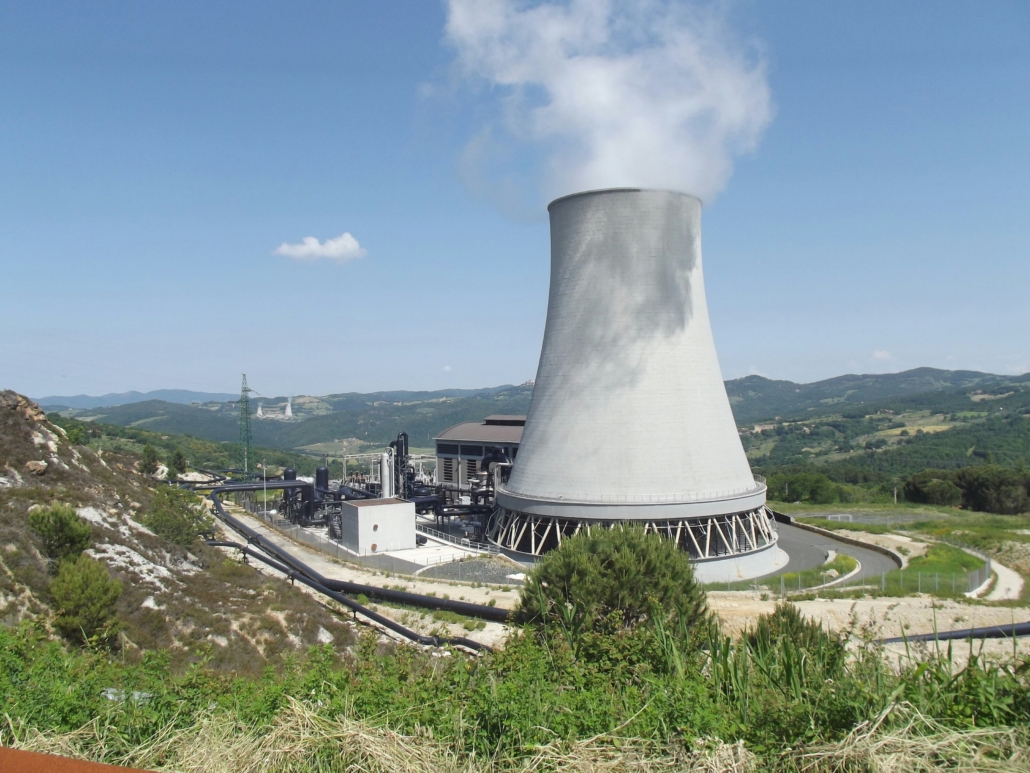
Most energy-transition coverage gravitates to solar panels and wind turbines. They are cheap, fast to build, and increasingly cheaper than new fossil generation. But they share a weakness that matters enormously for a coal-dependent grid: they are intermittent. The sun sets and the wind drops, and something has to keep the lights on. For Indonesia, one of the most compelling answers sits literally beneath its feet.
A world-class endowment
Indonesia is the world’s second-largest geothermal producer, a position that reflects its geology along the Pacific “Ring of Fire.” Geothermal already forms part of the country’s firm renewable base — the bulk of Indonesia’s roughly 15.6 GW of installed renewables comes from hydro, biomass, and geothermal, the dispatchable sources that can run around the clock.
That distinction is the strategic prize. Unlike solar and wind, geothermal delivers baseload power: steady, weather-independent generation that can directly substitute for coal rather than merely supplement it. In a power system where coal still supplies around 68% of electricity, firm renewables are not a nice-to-have — they are the only credible path to retiring fossil capacity without sacrificing reliability.
The plan is leaning in — modestly
The latest Electricity Supply Business Plan (RUPTL 2025–2034) earmarks about 1.8 GW of new geothermal within a broader 42.6 GW renewable build-out. Internationally backed projects are already moving: the Muara Laboh geothermal expansion is among the flagship investments approved under Indonesia’s Just Energy Transition Partnership, sitting alongside solar developments such as the Saguling floating plant.
Yet the geothermal allocation is strikingly small relative to the country’s resource potential — and relative to its value as baseload. That gap is the story.
Why the resource stays underused
Geothermal’s barriers are economic and structural, not geological. Projects carry high upfront exploration and drilling risk: developers must invest heavily to confirm a viable resource before a single megawatt is sold, and dry wells are expensive. Long permitting timelines, land and forestry overlaps, and tariff structures that have historically favoured cheaper-to-build options all push capital toward solar instead. The result is a paradox — a country rich in a premium renewable that under-deploys it because the early-stage risk is hard to finance.
The advisory takeaway
Geothermal is where the energy transition’s financing problem is most acute and most solvable. The technology is proven and the resource is abundant; what is scarce is capital structured to absorb early-stage exploration risk. This is precisely the role that catalytic and blended finance — including vehicles like the sovereign fund Danantara, multilateral partners, and JETP instruments — are designed to play. For developers and investors, geothermal offers a differentiated thesis: a firm, dispatchable renewable with a defensible competitive moat, in a market that needs exactly that. The opportunity is less about the resource and more about who can engineer the risk-sharing to unlock it.
This article is part of GK Group’s Green Energy briefing series. Figures reflect publicly reported data available at time of writing.

