
FIFA World Cup 2026 Final: How It Impacts the Global Economy & Business
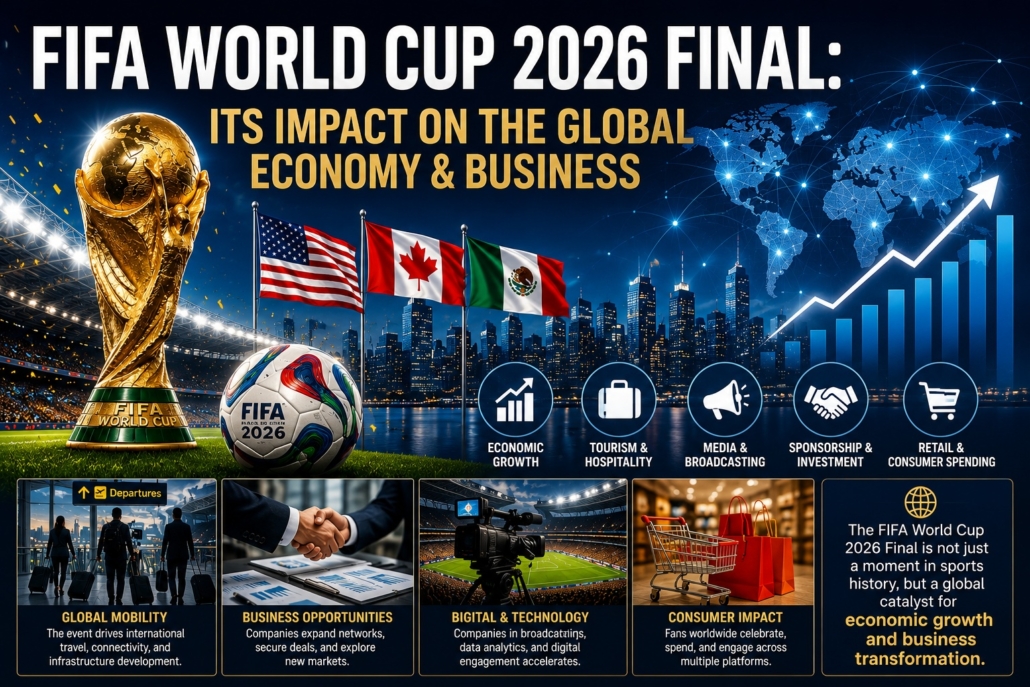
The FIFA World Cup 2026 Final extends beyond football, driving economic growth through tourism, media, sponsorships, digital commerce, and global business opportunities.
FIFA World Cup 2026 Final Was More Than Football! Here’s Why It Matters for the Global Economy, Tourism, Media, and Business
The FIFA World Cup 2026 Final marked the conclusion of the world’s biggest football tournament, but its significance extends far beyond the final whistle.
Every FIFA World Cup is more than just a sporting event it is a global economic powerhouse that drives billions of dollars in consumer spending, international tourism, media rights, advertising, sponsorships, and digital commerce. As millions of fans celebrated the tournament’s finale, businesses across multiple industries benefited from one of the world’s most influential global events.
For governments, investors, and business leaders, the FIFA World Cup 2026 Final offers valuable insights into how major sporting events continue to shape economic growth and business opportunities worldwide.
A Global Sporting Event That Drives Economic Growth
The FIFA World Cup has evolved into one of the largest economic events in the world.
Beyond football, the tournament stimulates economic activity through increased consumer spending, infrastructure investments, hospitality services, transportation, retail, and digital platforms.
As millions of international visitors travel to host cities, local economies experience higher demand across numerous industries, creating new jobs and generating long-term economic benefits.
Major sporting events like the FIFA World Cup also improve international visibility, encouraging future tourism, foreign investment, and global business partnerships long after the tournament concludes.
Tourism Experiences a Significant Economic Boost
Tourism remains one of the biggest beneficiaries of the FIFA World Cup.
Throughout the tournament, airlines, hotels, restaurants, entertainment venues, and local businesses experienced increased demand as football fans traveled from around the globe.
The economic impact extends beyond ticket sales. Visitors contribute to local economies through accommodation, transportation, shopping, dining, and cultural experiences.
For host countries, this global exposure strengthens their international reputation, positioning them as attractive destinations for future travelers and international events.
Media and Digital Platforms Reach Record Audiences
The FIFA World Cup 2026 Final generated enormous digital engagement across search engines, streaming platforms, news websites, and social media.
Millions of fans searched for match results, highlights, player statistics, halftime performances, and behind-the-scenes content.
This surge in digital activity creates valuable opportunities for publishers, advertisers, and businesses seeking to increase online visibility through timely, high-quality content.
For digital marketers, the tournament demonstrates the importance of leveraging real-time trends to improve search rankings, website traffic, and audience engagement.
Sponsorship Continues to Deliver Long-Term Brand Value
Global sporting events provide brands with unparalleled marketing opportunities.
Leading companies across technology, finance, automotive, food, beverages, and consumer goods invest heavily in FIFA sponsorships to expand brand awareness and strengthen customer relationships.
Unlike traditional advertising campaigns, sponsorships during international sporting events generate emotional connections with audiences, increasing brand recall and consumer trust.
The FIFA World Cup remains one of the most valuable global platforms for companies seeking international exposure.
Digital Commerce and Online Spending Continue to Rise
The popularity of the FIFA World Cup also fuels growth across digital industries.
Consumers increasingly purchase official merchandise, subscribe to streaming services, book travel online, and use digital payment platforms throughout the tournament.
This shift highlights how digital transformation has become deeply integrated into the global sports economy.
For businesses, understanding consumer behavior during major international events can unlock new opportunities in e-commerce, fintech, entertainment, and digital marketing.
What Businesses Can Learn from the FIFA World Cup 2026 Final
One of the biggest lessons from the FIFA World Cup 2026 Final is that global attention creates business opportunities.
Companies that quickly adapt to trending conversations through content marketing, social media, search engine optimization (SEO), and digital campaigns are more likely to increase brand visibility and customer engagement.
In today’s digital economy, speed, relevance, and valuable content have become competitive advantages.
Organizations that successfully align their marketing strategies with global events can generate sustainable business growth while strengthening their market position.
Conclusion
The FIFA World Cup 2026 Final proved once again that football is no longer just a sport—it is a global economic ecosystem.
From tourism and hospitality to digital media, sponsorships, retail, and technology, businesses across industries continue to benefit from the worldwide attention generated by the tournament.
For organizations seeking long-term growth, major global events like the FIFA World Cup present strategic opportunities to build stronger brands, engage wider audiences, and accelerate digital transformation.
As global sporting events continue to evolve, businesses that understand these trends will be better positioned to compete in an increasingly connected economy.
Frequently Asked Questions (FAQ)
Why is the FIFA World Cup important for the global economy?
The FIFA World Cup stimulates economic activity by increasing tourism, consumer spending, advertising, sponsorship investments, media rights, infrastructure development, and digital commerce across multiple industries.
How does the FIFA World Cup benefit businesses?
Businesses benefit through increased brand exposure, higher consumer engagement, tourism-related spending, sponsorship opportunities, and digital marketing campaigns that capitalize on global attention.
Which industries gain the most from the FIFA World Cup?
Key beneficiaries include tourism, hospitality, aviation, transportation, retail, media, advertising, technology, fintech, e-commerce, and entertainment.
Why do brands invest heavily in FIFA sponsorships?
FIFA sponsorships provide global visibility, strengthen brand awareness, improve customer trust, and connect companies with millions of consumers worldwide.
 © GAN Kapital Group (AI-generated illustration)
